Instinct Question: A Versatile Display Font for Creative Projects
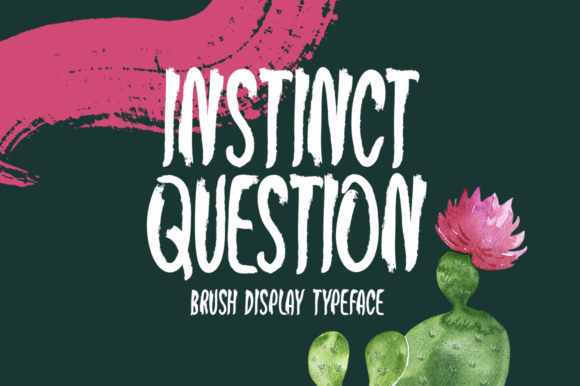
Instinct Question is a newly released display font that offers a unique blend of modern aesthetics and functional design. Designed with versatility in mind, this font is ideal for a wide range of creative applications, from stationery and logos to t-shirt designs and website headers. Its clean lines and distinctive character set make it a compelling choice for designers looking for a font that stands out while maintaining readability.
What Is Instinct Question?
Instinct Question is a display font that combines elegance with a touch of boldness. It is particularly suited for projects that require a strong visual impact without sacrificing clarity. The font features a wide range of glyphs and ligatures, making it adaptable to various design needs. Its PUA (Private Unicode Area) encoding ensures that users can access all the font's special characters and stylistic options with ease, offering greater flexibility compared to standard encoding methods.
Unlike many other display fonts that may be limited in their use cases, Instinct Question is designed to work well in both digital and print formats. Whether you're creating a logo for a brand, designing a flyer, or working on a poster, this font provides a professional and polished look that can elevate your design work.
Why Consider Instinct Question?
Designers and creatives may find Instinct Question appealing for several reasons. First, its unique style sets it apart from more common display fonts, allowing for a more original and memorable visual identity. This can be especially valuable for businesses or individuals looking to establish a distinct brand presence.
Another key advantage of Instinct Question is its adaptability. The font’s design allows it to work well in different contexts, whether as a headline, a tagline, or part of a larger typographic hierarchy. Its legibility at smaller sizes makes it suitable for use in areas where space is limited, such as business cards or product labels.
The availability of glyphs and ligatures through PUA encoding also adds to its appeal. This feature enables designers to incorporate custom symbols, alternate characters, and stylistic variations, giving them more control over the final appearance of their work. For those who value customization and detail, this level of flexibility can be a significant benefit.
Benefits and Tradeoffs
One of the primary benefits of using Instinct Question is its ability to add a sense of personality and flair to any design. Its distinctive style can help convey a specific tone or message, depending on how it is used. This makes it a good option for projects that aim to evoke a particular emotion or atmosphere.
However, there are some tradeoffs to consider. Because it is a display font, it may not be the best choice for body text or long passages of copy. Display fonts are typically designed to be eye-catching rather than easy to read over extended periods. Therefore, it is important to use Instinct Question strategically and in conjunction with other fonts that provide better readability for larger amounts of text.
Additionally, while the PUA encoding offers greater access to glyphs, it may require some technical knowledge to fully utilize. Users unfamiliar with PUA may need to explore additional tools or software to access all the font's features. This could be a consideration for those who are less experienced with typography or font management.
Situations Where Instinct Question Shines
Instinct Question is particularly well-suited for projects that require a strong visual statement. For example, it can be an excellent choice for logos, where a unique and memorable typeface can help differentiate a brand from competitors. Its bold yet refined style can communicate professionalism and creativity simultaneously.
In print design, such as flyers, posters, or photo frames, Instinct Question can add a touch of sophistication and modernity. Its clean lines and balanced proportions make it versatile enough to work in both high-contrast and low-contrast environments, ensuring that it remains visually appealing in a variety of settings.
For digital applications like website headers or image sliders, the font can serve as a focal point that draws attention without overwhelming the user. Its scalability across different screen sizes makes it a practical choice for web designers looking to maintain consistency in their visual elements.
When Alternatives Might Be Better
While Instinct Question has many strengths, there may be situations where other fonts are more appropriate. For instance, if the goal is to create a more traditional or classic look, a serif font might be a better fit. Similarly, for projects that require a more minimal or neutral aesthetic, a sans-serif font could offer a cleaner and more versatile option.
Additionally, if a designer is working on a project that requires extensive multilingual support, they may need to consider fonts that have broader glyph coverage. While Instinct Question is PUA-encoded, it may not include all the necessary characters for certain languages or scripts, which could limit its usefulness in international contexts.
For those who prioritize simplicity and ease of use, a font with a standard encoding system may be preferable. This can reduce the learning curve associated with accessing advanced typographic features and ensure compatibility across different platforms and software.
Decision-Making Insights
When deciding whether to use Instinct Question, it is important to evaluate the specific needs of the project. Ask yourself whether the font’s unique characteristics align with the desired visual outcome. If the goal is to create a standout design that reflects a bold or modern identity, Instinct Question could be an excellent choice.
Consider the context in which the font will be used. Will it be part of a larger typographic system, or will it stand alone as a headline? Understanding the role of the font within the overall design will help determine its effectiveness and appropriateness.
Finally, test the font in real-world scenarios. Preview it in different sizes, colors, and backgrounds to see how it performs. This hands-on approach can reveal any potential issues and ensure that the font meets the project’s requirements before committing to its use.